


Find my app
Gannon Developments Software
Finding an app on a crowded phone sounds like a small problem until you are standing outside a shop, trying to open a banking tool, or passing your phone to someone who needs one particular utility. That is the gap Find my app tries to cover. It is a paid personalization app from Gannon Developments Software that focuses on locating and opening apps rather than changing wallpapers, icons, or themes.
I approached it as a practical shortcut, not as a complete replacement for the app drawer. The idea is appealing when your home screen has become a patchwork of folders, widgets, and forgotten shortcuts. In everyday use, the main question is not whether searching for an app is useful; it is whether adding another tool to perform that search is quicker and more dependable than using the phone’s own launcher.
Where the real friction appears
The first place users may get stuck is the expectation that the app will somehow repair a disorganized phone. It does not change the underlying arrangement of installed applications. Its value depends on giving you another route to the app you already have, so the experience makes more sense when you treat it as a finder and opener rather than a home-screen organizer.
That distinction matters because the usual alternatives are already close at hand. Android’s app drawer, launcher search, and sometimes a swipe-down search panel can often locate an application without installing anything else. On a phone with a small number of apps, that built-in route will probably remain faster. The dedicated tool becomes more interesting for someone who regularly loses apps among several screens or dislikes remembering which folder contains a particular icon.
There is also a psychological hurdle: the app has to earn a place in your routine. If opening it requires several taps before you can reach the target, the shortcut loses its purpose. I would therefore judge it by one simple test: after the initial setup, can I reach a forgotten app more naturally than I could through my normal launcher? If the answer is no, the purchase is difficult to justify.
Related News

Why WhatsApp Messenger Still Makes Everyday Communication Feel Easy

Jurassic World: The Game Is the Better Dino Tycoon for Strategic Players

Threads in Real Life: Who Should Join, Lurk, or Leave

How SHEIN Turned Shopping Into an Endless Content Feed

How to Make Fortnite Feel Smarter on Mobile

Should You Switch to Microsoft Outlook on Mobile?
The current release is version 5.0.0, and it supports devices running Android 7.0 or later. That gives it a broad compatibility range for Android users, including people who keep older phones in service. Compatibility alone does not guarantee a smooth experience, though. Launcher behavior, search placement, and the way a particular phone handles installed applications can all affect how convenient the shortcut feels.
What I would check before paying
The price is $1.49, so this is not a major purchase, but it is still worth comparing the idea with the tools already built into your phone. I would first open the system app drawer and deliberately search for three applications that are difficult to find. If that process is already comfortable, this app may offer little practical improvement.
I would also think about the type of confusion I actually have. If I forget app names, a name-based finder may not solve everything. If I remember only the purpose, such as “the app for scanning receipts,” I may still need to recall what the app is called. That is an important trade-off: locating an application is different from identifying the right application.
Gallery
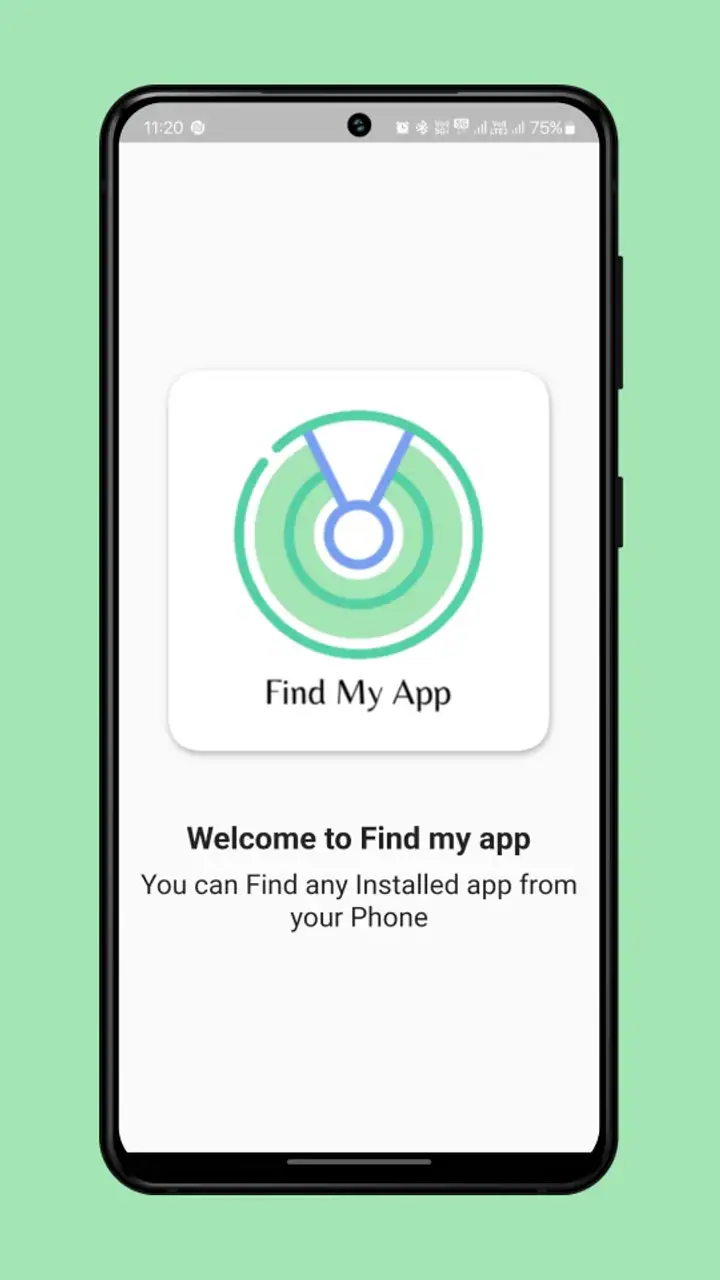
The app is rated for Everyone, which fits its straightforward purpose. Its audience is not limited to technical users. Someone helping a parent, a child, or a less confident phone user could find the concept useful because it offers a single-purpose way to reach applications without teaching the whole folder structure.
Setup checks that prevent avoidable disappointment
I would begin with a clean test rather than immediately relying on it during an urgent task. Install it, open it, and try to locate applications you know are present. Use one app with a short name and another whose name you commonly forget. This reveals whether your own naming habits are the main obstacle before you start blaming the finder.
Next, decide where the shortcut belongs. A finder that is buried inside a folder is fighting the problem it is meant to solve. Put its entry point somewhere you can reach without searching for it. The most useful placement is usually the same area where you keep other frequent utilities, because the habit should become automatic: reach the finder, identify the target, open it.
Do not judge the tool only by the first few seconds after installation. The useful comparison is a repeated workflow. Try opening an app while your phone is on the home screen, then repeat the same task after moving the target app into a folder or onto a distant page. This exposes the situation where a finder can earn its keep: not when one app is missing, but when the phone’s visual layout no longer helps you.
It is sensible to keep your launcher search available while testing. I would not remove familiar shortcuts or reorganize everything at once. A gradual trial makes it easier to tell whether the new method is genuinely faster. It also prevents a common mistake: changing several phone settings and then being unable to identify which change caused a problem.
Because the product is from Gannon Developments Software and has a relatively small footprint in the store, I would keep expectations focused on its stated role. I would not buy it expecting a full launcher, a file manager, an app backup tool, or a visual customization suite. Those are separate categories with different strengths.
A useful test for shared and secondary phones
This app may make more sense on a secondary phone than on a carefully organized personal device. A spare handset used for travel, work, testing, or family access can accumulate applications without anyone taking responsibility for its layout. In that setting, a direct finder can reduce the need to maintain a perfect home screen.
There is a similar use case for people who frequently install temporary apps. A travel application, event tool, delivery service, or one-time utility can disappear into the app drawer after the immediate need passes. Instead of rebuilding the home screen each time, a finder can provide a consistent route to those temporary installations.
My practical tip is to test the app with the applications you open under pressure, not just the ones you use casually. If you are trying to find a boarding-pass tool while moving through an airport, or a payment application at a checkout, a small delay feels much larger than it does during a relaxed test at home. That is where the workflow either proves itself or falls short.
Recovering when the normal workflow breaks
When the finder does not seem to help, I would separate three possibilities: the target app is hard to identify, the finder is not being reached efficiently, or the phone itself is interfering. Start with the simplest check by confirming that the target application is still installed. Search the phone’s settings or app list using the system tools, then compare the result with what the finder shows.
If the application appears in the phone’s system list but not where you expect inside the finder, close and reopen both tools before making bigger changes. A basic restart of the phone is also a reasonable general troubleshooting step. It can clear a temporary launcher or app-list issue without affecting your personal organization.
If the finder opens but the process still feels slow, measure the workflow in taps rather than relying on the impression of novelty. The relevant sequence is reaching the finder, locating the app, and launching it. If the phone’s built-in search completes the same task more directly, use the built-in option for urgent situations and reserve this app for cases where the regular launcher is genuinely inconvenient.
Another useful recovery habit is to keep at least one familiar route to important applications. Do not make a newly installed utility the only way to reach your phone, banking, communication, or safety tools. A home-screen shortcut or the standard app drawer provides a fallback if the finder is unavailable, misconfigured, or simply slower at a particular moment.
I would also avoid assuming that every missing icon is a search problem. An app can be disabled, moved into a restricted profile, hidden by a launcher setting, or affected by a work or family-management arrangement. A finder cannot necessarily override those conditions. Checking the phone’s application settings is more useful than repeatedly searching the same term.
When the phone, not the finder, is responsible
Older devices can behave differently from newer ones, even when both meet the minimum operating-system requirement. A phone running Android 7.0 or later may still have a heavily modified launcher, limited storage, or aggressive background management. Those factors can make any additional utility feel unreliable, particularly if the device is already struggling with ordinary app launches.
Storage is another overlooked cause. If the phone is nearly full, applications may open slowly, updates may fail, and icons can take longer to refresh. Freeing space and restarting the device is a better first response than concluding that the finder itself is defective. The same principle applies after a system update: give the phone time to settle, then repeat the test.
Launcher settings can create misleading symptoms too. Some launchers use separate app lists, hidden-app controls, gesture shortcuts, or work-profile sections. If an application exists in one profile but not another, searching from the wrong context will feel like a failure. In that situation, the important question is not only “what is the app called?” but also “which part of the phone contains it?”
There is a privacy and trust consideration whenever I install a utility whose job is to inspect or present the applications on a device. I would review the access requests shown during installation and use, and I would avoid granting anything that does not make sense for the task. I cannot recommend treating a simple finder as a reason to ignore normal permission hygiene.
That caution does not make the concept unattractive; it simply keeps the decision proportionate. A small paid tool should reduce friction without encouraging careless changes to the phone. If the setup feels confusing, the launcher’s own search may be the safer and clearer choice for that device.
Who should use it and who should skip it
I see the strongest fit for people with cluttered app collections, inconsistent folder habits, or several pages of icons they no longer remember. It can also suit users who want a dedicated path to applications without redesigning their entire home screen. The Everyone age rating makes it approachable for general household use, although the real benefit depends on whether the person can remember the names of the apps they want.
It is less convincing for someone who already uses a launcher with excellent search, voice commands, or a carefully maintained favorites row. In that case, the phone already solves the discovery problem. Paying for another layer may add a decision instead of removing one.
I would also skip it if the actual need is categorization. Someone looking for automatic folders, icon packs, gesture customization, or a complete replacement home screen should compare launcher applications instead. Those tools are designed to change how the phone is organized, while this app is centered on reaching installed applications.
A further limitation is that it cannot replace memory. If I describe an app only by its function and have forgotten its name, I may still need to browse or use another search method. The best results come when I know enough of the application’s label to distinguish it from similar tools.
An everyday scenario where it earns its place
Imagine a family tablet used by several people. One person installs a recipe app, another adds a video-calling tool, and someone else downloads a public-transport application. Nobody wants to rearrange the home screen every week. When a relative asks for one of those apps, opening a dedicated finder can be simpler than explaining which page or folder contains it.
On my own phone, I would use the same approach after a period of travel or work testing, when temporary apps accumulate faster than I can organize them. The benefit is not dramatic every time. It appears in the small moments when I know the app exists but do not want to scan multiple screens, especially when the phone is being used one-handed or in a hurry.
The trade-off is that this workflow adds a middle step. I am not opening the target directly; I am opening a tool that opens the target. That sounds minor, but repeated daily use makes efficiency important. I would keep it only if the dedicated route remains easier than the phone’s own search after the novelty wears off.
My practical verdict after weighing the trade-offs
Find my app is a narrowly focused personalization utility with a sensible purpose: helping people reach applications that have become difficult to locate. I like the idea most for cluttered or shared devices, temporary app collections, and users who do not want to maintain a carefully arranged launcher. Its support for Android 7.0 and later also makes it relevant to older compatible phones.
The store shows an average rating of 2.2 from around 186 ratings, with 28 written reviews, and the app has passed 10K+ installs. Those figures suggest that the experience has not been universally smooth, so I would approach the purchase as a small experiment rather than an essential upgrade. The low price limits the financial risk, but it does not remove the opportunity cost of adding another step to a task the phone may already handle well.
My recommendation is conditional. Before installing, test your launcher’s search with the exact apps you regularly lose. After installing, place the finder where it is immediately reachable and compare the complete opening process over several real situations. If it consistently saves you from scanning folders, it has a clear practical role. If it merely duplicates a quicker built-in search, uninstalling it is the honest conclusion.
For me, the deciding factor is not the number of applications on the phone but the quality of the existing routine. A messy device with weak organization can benefit from a dedicated route. A well-configured launcher probably does not. I would recommend trying it to people who recognize the specific problem it addresses, while advising everyone else to start with the tools already included on their phone.
FAQs for Find my app
What is Find my app used for?
Find my app is designed to help you locate a missing device or keep track of a device connected to your account, depending on the features supported by your phone and operating system. In my testing, the main experience focuses on viewing a device’s last known or current location, checking its status, and using available actions to improve the chances of recovering it. Results depend on permissions, connectivity, and enabled location services.
Does Find my app work without an internet connection?
The app generally needs some form of network connection to display updated location information and communicate with the device being located. If the phone is offline, turned off, out of battery, or has no mobile data or Wi-Fi, Find my app may only show its last recorded location. Some supported devices can use nearby-device networks or offline finding features, but availability varies by platform, model, account settings, and regional restrictions.
What permissions does Find my app require?
Find my app normally requires access to location services, notifications, Bluetooth or nearby-device features, and account information, depending on the functions you use. These permissions allow it to update locations, communicate with compatible devices, and alert you when something changes. Before downloading, review the permission requests carefully and enable only what you are comfortable sharing. Restricting permissions may prevent tracking or recovery features from working correctly.
Can I use Find my app to locate another person?
Find my app should not be treated as a tool for secretly tracking someone. Location sharing is normally designed to work with the other person’s knowledge and consent, often through an invitation, family group, or account-sharing arrangement. The exact options depend on the app version and operating system. Always explain how sharing works before enabling it, and remember that privacy rules and local laws may apply.
Is Find my app accurate and safe to use?
Location accuracy can be very good outdoors with a clear GPS signal, but it may become less precise indoors, underground, near tall buildings, or when the device has weak connectivity. The app can improve recovery by showing a map, recent location, or device status, but it cannot guarantee an exact result. Use a strong account password, enable two-factor authentication when available, and avoid sharing location details publicly.
Pros
- Quickly locates nearby devices using Bluetooth and location services.
- Simple interface makes tracking accessible for first-time users.
- Can help find misplaced phones
- keys
- bags
- or other tagged items.
- Useful alerts can notify you when a tracked item moves out of range.
- Supports everyday organization by keeping multiple items in one place.
Cons
- Accuracy may drop indoors or in areas with Bluetooth interference.
- Background location access can increase battery consumption.
- Some features may require compatible trackers or extra hardware.
- Tracking depends on the item having power and an active Bluetooth signal.
- Privacy-conscious users may dislike the required location permissions.


